Mary Morgan Voice Artist Branding Logo

Mary Morgan

  • Home
  • Demos
  • About
  • Videos
  • Testimonials
  • Clients
  • Vocalist
  • Blog
  • Contact

Voice Over

Respect Vs. Fame

January 8, 2017 by MaryMorgan

It’s 2017 and I’ve decided to do my very best to add VO related articles to my blog 3-4 times a month, primarily on Sundays.

I encourage readers to subscribe if what I have to share is of value. If not, no worries.

As a kid, I wanted to be famous. I won’t lie. The 1980s was just such a magical time for me when it came to movies and cartoons. I wanted to be part of it all. Then the 1990s came and the magic slowly began to fade. When the 21st Century arrived, it wasn’t about wanting to be famous as much as being part of amazing projects. And as time passed the thought of being famous sounded more like a nightmare.

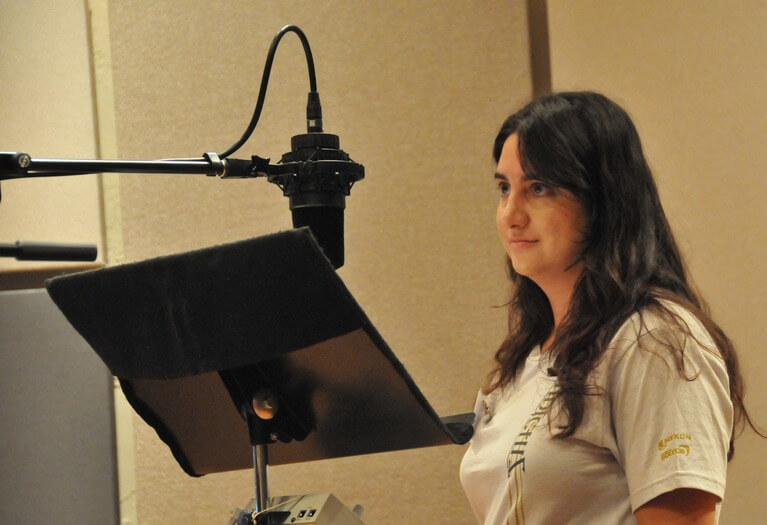
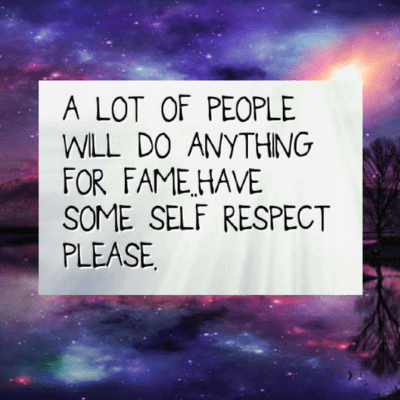
Every day, the media shows what it’s like when intrusive paparazzi stalks well-known actors, YouTube stars, and even their children! Anything they say, anything they do, anywhere they go and anything they wear in public is judged. They’re on display like animals in a zoo, and why? Because they appear on a screen for the entertainment of others. That’s fame today. And the viewers who idolize and obsess over them are forgetting there’s more to life than illusions. This can happen in voice over too. Sooner or later people want to know what the person behind the voice looks like, how they talk in real life when they’re not in character, or if they can talk to them in person at a convention. The latter is what I hear about the most. And when I meet young people who tell me why they want to “get into” voice over, that’s one of the top reasons. They never talk about committing time to acting classes, performing in theatre, reading out loud every day to improve their speech, attending VO workshops or participating in improvisation workshops, or networking with experienced VO talent. They want to be the next “so-and-so”. They want fans clamoring to take their picture or asking for autographs. They want to make LOTS of money and fly all over the world attending conventions to feed their egos.
q1

I know more than enough voice actors who enjoy the fame that comes with the work. I however, don’t have a legion of fans, but I do have lots of friends in the entertainment industry as well as lots of colleagues, a great client list, working relationships with creative people — hardworking agents doing all they can to help me – – and a great deal of support from admirers inside and outside my family. Everything mentioned above is what I value far more than fame. It’s respect.

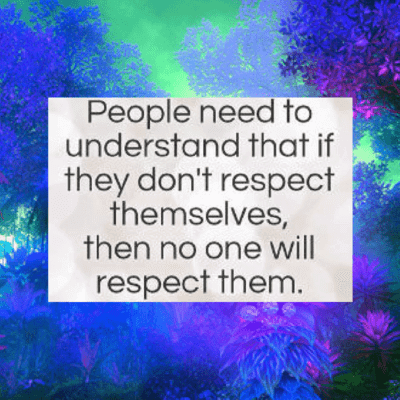
Fame doesn’t make you a great voice over. It doesn’t guarantee more work. It can eat away at the soul, turn people sour against you, and in the end, isolate you from all that’s been good in your life. A handful of people in the world understand how to treat fame with humility. You only need to watch YouTube, or visit celebrity gossip sites to see how the rest handle it.
q2

If you want to be a voice over, ask yourself why. Is it to achieve fame and fortune or respect and creative employment?

If it’s the later you must work hard at your craft, listen to professional wisdom, take criticism whether it be positive or negative, practice daily, network, keep up with changes in the industry, have patience when things don’t go your way, and appreciate others whether they help you or not.

If it’s the former, then nothing I can say in this blog will help you. Just google “How to be Famous” and see what comes up.


youtube-pic

Filed Under: Voice Over Tagged With: Acting, Creativity, fame, famous, Hard Work, humility, practice, respect, respectful, Voice Acting, Voice Over

Voice Over Knowledge Shared

June 14, 2016 by MaryMorgan

images

Want to guess how many times I get asked “How can I be a voice actor?”

I have no problem hearing the question, because I was asking it myself years ago. There is a problem, though. The advice that I tend to offer for free is typically ignored or unappreciated. It’s okay. I’m not bitter. But I do find it irritable when folks expect an easy way to get in, as though I could wave some magic wand and just turn them into legit voice actors. Or as one person asked me:  “Could you help me get a lead on one of your shows?”

First let me just say that I fully respect anyone and everyone who has aspirations to do what they love, and I want to support individuals who are serious about pursuing their dream careers. However, there are those who want to bypass the work and rely on ego and attitude to get them places. I’m sorry to say, they probably won’t get too far. I’ve put in so much time to write emails full of information which I researched for days and days and in some cases received from genuine voice over resources themselves. Lately no one wants to read all the info; they want me to make a phone call and give fictional praise on their behalf because they believe they’re just as good as the talent working today. If I don’t know you personally and have never seen you act then it’s not going to happen. If you call one of my clients, agents or teachers and falsely claim that I recommended you when I didn’t, it really won’t happen. And to folks who use anger and bullying, it will NEVER happen. For everyone else, this is not meant to be discouraging; it’s meant to give some direction.

Back to what is said at the top of the page, “Knowledge is Power”, and the internet is a gold mine of knowledge. I’ve trained with numerous working voice actors, attended seminars and workshops by respected casting directors, networked for years with voice over talent who are my second family, and together we’ve all kept up with what’s current in the entertainment industry, the markets, the genres, conventions, workshops, tutorials and LOTS more through the internet and word of mouth. So instead of responding to emails and posting all the precious information I’ve put together, I’m going to put as best as I possibly can a condensed version here on my blog. Anyone who emails me asking the same questions will be sent a link here. If you are a potential voice actor, it’ll be your job to decide what to do with this information. Keep in mind two things though: Voice over is VERY competitive, and no matter where you are in your career, you shouldn’t EVER stop learning.

Pat class me focused

To be a Voice Over know first that acting is acting. I know of very few people who got into voice over work without being an actor first. Even if you only want to pursue commercials, narrations, or announcements, an acting class will benefit you in tremendous ways whether it be theater, film, or improvisation. You gain an understanding of what it means to be directed, how to use your voice correctly, and enhanced reading skills. If goals are focused towards animation, video games, anime or puppetry, acting classes are MUST. No excuses. Funny voices don’t make a character authentic, acting does. If you live somewhere that doesn’t have ongoing film, theater or improvisation classes to take in person fear not. Thanks to Skype, Zoom, Youtube and many others you can learn from a distance by attending webinars, online programs, group courses or one-on-one training with a reputable coach. Some names mentioned are people I haven’t trained with yet but through colleagues that I trust without any doubt whatsoever, I believe they’re experts worthy of notice. If there’s a name on my list of teachers that isn’t mentioned it’s due to one of two possible reasons: 1. I haven’t heard of the individual yet. 2. I have in fact trained with the individual and what they teach is false.

Everyone has a website these days so all you have to do is google their names for more info.

IMPORTANT NOTE ON DEMOS: Do not get a demo made until you’ve had enough training to start somewhere. False teachers/producers will try to talk you into letting them produce your demo when you’re far from ready. It’s an expensive mistake that can also damage your first impression to others. People remember bad demos. NEVER forget that. Visit http://www.videovoicebank.net for examples of top-notch demos. Listen to names (including celebrities) under agents like William Morris Endeavor, DPN, CAA, VOX Inc., CESD, SBV, AVO, Atlas Talent, Osbrink Agency, Coast to Coast Talent, Abrams Artists and Associates, and TGMD. Can you do what they do and sound believable?

Teachers I have trained with, most have expertise in more than one genre or market: Lisa Biggs (kid voices, voice acting toys), Everett Oliver (animation), Pat Fraley (audio books, animation), Cliff Zellman (commercials), Ginny McSwain (video games), Bob Bergen (animation), Dave Fennoy (video games), Joyce Castellanos (Promos), Mary Lynn Wissner (commercials), Katie Leigh (animation), Marice Tobias (commercials/narration), Richard Horvitz (animation), MJ Lallo (animation), Bill Holmes (commercials), Marc Cashman (commercials), Lani Minella (video games), Bruce Carey (commercials), Bob Michaels (commercials), John Swasey and Ned Lott (ADR Looping)

Demo Producers I have worked with or I have complete trust in: Chuck Duran, Marc Graue Studios, Susan Palyo at Voice Trax West, Cliff Zellman, Richard Horvitz, Nancy Wolfson, Roy B. Yokelson, David Rosenthal, Cristina Milizia

Voice Over Guides from Working Professionals in Animation, Video Games and Anime:
https://iwanttobeavoiceactor.com
http://www.kylehebert.com/
http://www.crispinfreeman.com/faq.html

Group/Private Training and Workouts for all kinds of Voice Over markets:
http://www.globalvoiceacademy.com/
http://www.voicetraxwest.com/classdescriptions/
http://www.fixinthemix.com/Voiceover_VO_Class.htm

Voice Over Blogs or Web Talk Shows:
http://www.nethervoice.com/nethervoice/
http://courvo.com/blog
http://blog.audioconnell.com/
http://www.vobuzzweekly.com/

Help with Marketing and more:
https://www.marcscottcoaching.com/lesson/marketing-for-success/ 
http://anneganguzza.com/services
http://www.celiasiegel.com/

Voice Over Communities:
http://www.vo-bb.com/phpBB2/
https://twitter.com/courvo/lists/voiceoverists (Also search for a plethora of groups on Linkedin, Facebook, Pinterest, etc.)
http://www.voiceoveruniverse.com/
http://www.voxyladies.com/

Voice Over Conventions:
http://www.voatlanta.me/
http://www.faffcon.com/ (working professionals only)
http://faffcamp.com/ (those starting out or already seasoned in VO)
http://www.world-voices.org (runs WOVOCON)
http://randythomaspresents.com/
http://www.midatlanticvo.com/
http://voxyladies.com/voxy-summit-2016/
http://www.midwestvoiceoverconference.com/
http://thatsvoiceover.com/

Home Recording Studio Experts:
Dan Lenard – www.homevoiceoverstudio.com/
George Whittam – http://www.vostudiotech.com/
Dan Friedman – http://www.sound4vo.com/

A few examples of Professional Voice Over Websites:
http://voiceoversandvocals.com/ 
http://bethchaplin.com/VO/
http://www.bernadettesullivan.com/
http://www.nazvoice.com/
http://www.lorialan.com/
http://www.mikematheson.com/
http://www.dbcoopervo.com/yeah/

Miscellaneous Resources:
http://www.voiceoverresourceguide.com/
https://www.audiopub.org/ (for audio book narrators)
https://www.voiceoverxtra.com/
Last but nowhere near the least are Don’ts and Do’s that I’ve compiled based on my own experiences. May you all follow your dreams and find success!

WHAT NOT TO DO
– Don’t stop in the middle of a recording. If you mess up during a recording or audition don’t ask the engineer to stop recording and don’t waste time apologizing, just go back to the beginning of a line or paragraph and start again. Engineers can edit out mistakes.

-Don’t offer suggestions to the director unless you are asked

-Don’t let any coach (no matter how reputable) convince you that you’re ready to make demo after 2-3 sessions, especially if you’re a beginner.

-Don’t have a friend make an edit for you unless they have extensive professional experience. It’s very easy to tell if an audio production was produced on cheap software ore a high quality studio. You want the best to make you sound the best.

-Don’t eat dairy products or a super heavy meal before a recording session.

-Don’t spend thousands of dollars on a home studio, ask around for advice on good microphones, recording software, speakers, headphones, etc.

-Don’t show up in person to hand studios, agents, or casting directors your demo. Look at their website for rules on submissions (if there are any), then call to see if the company has a casting department or ask who casts the shows/games. Most casting directors prefer a link to your demo from a website rather than an mp3 as they take up space.

-Don’t tell everyone about a project you’ve recorded on social media unless the client is okay with it. Overzealous anime and video game fans will do almost anything to get the gossip on who voiced what character. Wait until the studio makes a cast announcement online or ask them personally if it’s okay to share news about your latest voice over job.

-DON’T EXAGGERATE ON YOUR RESUME. People in this business do look up people and places that you list and if it’s not legit, word will spread super quickly.

-Don’t call studios, agents or casting directors saying someone referred you if it’s not true. You won’t be hired and more than likely never trusted as second time.

-Don’t strike up a conversation with another VO actor at an audition in person. If there’s a script for you to look over, read it, study the available information. Afterwards, make friends, but be respectful to those auditioning after you.

-Don’t beg for a job. Ask about upcoming auditions or share news of a recent project (without bragging) or a new voice over demo, but don’t e-mail clients specifically asking if they can give you a job.

WHAT TO DO

-Do be on time when recording in a professional studio, fifteen minutes early at best.

-Do let producers, casting directors or your agent know if you’re running late (traffic, accidents, events, etc.)

-Do pay attention to all direction given to you in a session

-Do ask questions if something doesn’t make sense, don’t give the director a hard time pretending you understand if you really don’t

-Do bring your own water. Some studios have some for you but not always.

-Do practice a script if the client sends you a copy to work with. If you can look at your script the day before recording READ it and PRACTICE out loud.

-Do always keep training in some way, take ongoing acting lessons, attend workshops, seminars, watch youtube videos, read articles, listen to other demos

-Do market yourself with business cards, postcards, CDs, websites,

-Do network with others at events (see conventions list) you never know who you might meet

-Do keep up with what’s happening in the industry. So many do not do this.

-Do make friends with other VO talent. Many pass jobs to each other or recommend friends to agents and studios.

-Do keep a positive attitude, it’s a VERY competitive business and everyone goes through ups and downs. Everyone. But if you’re negative, especially around people in the business, people will not want to work with you or recommend you to clients.

-Do take care of your body with vocal warm-ups, physical exercises, and good personal hygiene.

-Do research coaches, classes, to see if they’re legit, ask around forums, get REAL opinions, don’t necessarily rely on online testimonials alone.

-Do listen very carefully to demos. Recognize what sounds real and what sounds fake. A voice actor (even a coach) may say they can sound like a baby, kids, teens, but vocally they’re incapable of sounding authentic. If you can sound like a baby, have it on your demo or be prepared to have a dynamite audition. First impressions really do matter.

-Do take criticism and learn from it.

-Do have fun! Enjoy life!

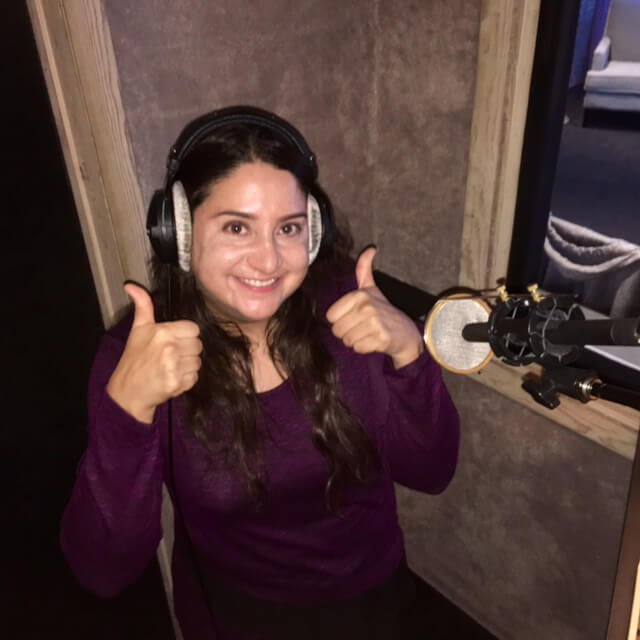
me recording

Filed Under: Creativity, Voice Over Tagged With: Acting, Advice, Animation, Anime, Audio Books, Characters, commercials, Community, Competition, Creativity, Experience, inspiration, Knowledge, Learning, practice, presentation, Production, Resources, Teachers, Video Games, Voice Over

Commercial Voice Over… a mere start

September 15, 2015 by MaryMorgan

“I want to read commercials for radio, internet and TV and make lots of money.” Okay, nothing wrong with that but the competition is fierce. What kind of products? Cars? Food? Medical? Cosmetics? Restaurants? Sports?

If yes to all the above, first, you should know what you’re getting into. Second, practice! Third, market yourself. Back to practicing though, how are your reading skills? Read something out loud for 20 minutes every day, anything, a book, magazine, etc. After a week or two has passed, start recording yourself, and take notice of the pace you read; any words stand out need more emphasis? Is punctuation necessary? Are you telling a story or selling a product?

Now, look for newspaper clippings, ads in magazines and read them out loud as though for a commercial. Your job is sell the product to the listeners. So in the script, no matter how long or short, imagine your audience asking such questions as these: Who are you? What is the product you’re selling? Do you believe in the product? Why should I buy the product? How does this product work?

This technique is mentioned countless times, just like in the post regarding Dave Fennoy and his Video Game Acting workshop. However the questions in that post were meant to help the reader establish their characters. Here these questions are meant to help define what you, the seller, wants to say to the listener/buyer. The more you practice asking questions with your lines the more you’ll look at a script and understand how to interpret what you’re selling or sharing with listeners convincingly without writing many notes and thus developing a conversational reads.

If you’re alone, pretend someone is asking these questions. For practice, if you have a way to record yourself while reading the script and the questions, just cut the questions out of the audio once done and listen to the playback. Better yet, have a friend or family member read the questions and answer them the way you would on a conversational level.

First Example:
(SCRIPT)
What is the topic/product? Biodiversity. What does it do? It rules our oceans. But it’s threatened!
Why should I care? And that means big trouble for our life on Earth.
Oh? How is this possible? Learn why on the next Radio Expeditions special coming this October from the National Geographic Society and National Public Radio.
When? Call your local NPR station for broadcast times.

Second Example:
(SCRIPT)
Feel and See
Feel and see what? Genuine leather, Ceramic Craft and Metallic Craft. What for? The back of the all-new LG G4 has been fabricated in three cutting edge materials, each designed with an eye towards classic craftsmanship. Ok, is that all? And with 5.5” IPS Quantum QuadHD display and 16 MP camera with an f/1.8 lens underneath it all. So what does it do? It performs as beautifully as it looks.
Is it worth it? See the Great. Feel the Great.
Where can I learn more about it? Visit www.LG.com/G4

Third Example:
(SCRIPT)
What are you doing? Presenting the new Unstoppables collections with ultra-long-lasting scents. What do I do with these? Smell like the lifestyle you deserve. What are they called again? Unstoppables.

***
Do you sound like a conversational person or an announcer? If it’s the latter keep rehearsing, and asking the questions multiple times till you have a feel for the conversational. The vast majority of magazine ads are not written to read aloud like scripts for TV or radio, but if you can make them sound legit, they can make great copy for future commercial demos. Don’t be discouraged if it doesn’t work out. It’s about practice! There’s also the option to find commercial copy online through a genuine search on google. Then pick scripts that you feel comfortable with and repeat the question exercise again.
That my friends, is the just the start.
Later discussions will include which workshops or classes to consider for commercial voice over and classes that are helpful when pursuing animation and video games.

Filed Under: Voice Over Tagged With: commercials, conversational vs. announcer, interpretation, practice, presentation, products, script reading, Voice Over

Maestro David L. Jones and the Swedish/Italian School of singing

September 3, 2015 by MaryMorgan

Since healthy vocalism is essential in voice over or singing, how do you keep it in good shape? Vocal exercises help, but how can you be sure you’re doing them correctly? How do you know which technique or methodology works?

Even if you don’t plan to pursue singing as a career, having or practicing musicality will help tremendously. Monotonous tones are not exactly favored in some areas of voice over, unless the script requires it. Voice training benefits the actor is countless ways to increase vocal ability and well-being; however, you want a teacher who understands the instrument and not just hearing you sing. The concepts used in the Swedish/Italian School of Singing have been proven to be extraordinarily effective for vocalists and in repairing vocal damage.

Sadly, only a few places online seem to supply good information regarding the history and overview of the Swedish/Italian School (which can be applied to all musical styles), but these days none more so than that of maestro David L. Jones who has spent more than 30 years researching, documenting and distributing the traditions and vocal exercises.

He shares a brilliant amount of wisdom in articles he posts on a regular basis on his website (http://www.voiceteacher.com) which is more than worth the read. The hardest part is finding anyone nearby who teaches the same philosophies.

So much goes into posture, breathing, the throat muscles, even the placement of the tongue appropriately. Yes, it can get technical at times, but the research is worth it.

Now sadly, in voice over, depending on markets like animation and video games, scripts can be quite demanding of voice actors and their instruments. Warm ups and/or various vocal exercises done for say 10-15 minutes each day will strengthen the vocal chords so that they’re prepared for long hours of recording and help reduce discomfort in the throat when certain reads need shouting, screaming, high voices, low voices, creature voices and so on. A great CD made by David L. Jones introduces fundamental concepts like posture exercises, breath management, healthy adduction of the vocal chords, pharyngeal vowel exercises, jaw/larynx function, jaw/facial posture, and more. On the other side are vocalization exercises to practice daily which are most recommended.

Physical exercise deserves prompt attention as well, but that will be discussed in a later post.

Here’s a great video about how David L. Jones came upon the concepts from the Swedish/Italian School of Singing (http://www.youtube.com/watch?v=D1q4AUoXoj0)

One of his students also has a youtube channel devoted to showing instructional videos based on techniques and concepts taught to him. (https://www.youtube.com/playlist?list=PL5ayUafSkg7pGhgq7wqkCQ1V9l1Yw0KFu)

On your journey to becoming a better voice over artist, read the articles by Mr. Jones and see where you stand with your voice. Could it be better? Stronger? More relaxed? Healthier?

Filed Under: Music, Voice Over Tagged With: breath management, jaw/facial posture, jaw/larynx function, methodology, pharyngeal vowel exercises, repairing vocal damage., Swedish/Italian School, vocal ability, Vocal exercises, Vocal Health

Video Game Voice Acting with Dave Fennoy

August 25, 2015 by MaryMorgan

The world of voice over is growing in ways that can’t be calculated. Think about the markets. For example: Commercials, industrials, corporate videos, Internet videos, animation, anime, narrations, audio books, announcers, theme park rides, political endorsements, toys, video games, and as technology progresses, imagine how much longer the list will grow.

Now look at sub-genres of a market like video games: First-person shooters, role-playing games, point-and-click adventure, tower defense, interactive movie, survival horror, MMO (massive multiplayer online), just to name a mere few.

As video games continue to expand, again — thanks to technology — voice over talent must follow with what’s current. Reading lines isn’t enough anymore, because believability is in high demand. For those wanting to pursue voice over in video games it helps to learn from someone steadily working in them such as Dave Fennoy (http://m.imdb.com/name/nm0271965/).

Dave Fennoy

Mr. Fennoy took time out of his busy schedule to travel to Dallas, Texas, and share his incredible wealth of knowledge in voicing video games, and the results were nothing less than impressive.

For example, when reading an audition, it helps to read the character bio if it’s provided. However, for times when one isn’t available, the imagination becomes a most important tool.

Ask yourself these six questions:

-Who, What, When, Where, Why and How?

Depending on what’s in the script, you might need to get more technical with the questions:

-Who am I? What am I doing? Where am I? When am I doing it? Why am I doing it? How did I get here?

Now consider answering those questions. If little to no background of the game or the character is supplied then create them.

Who am I? Leesa, a dinosaur expert and time travel hobbyist in my late 20s.

What am I doing? Protecting a group of travelers from man-eating beasts.

Where am I? A prehistoric jungle.

When am I doing it? Right here, right now.

Why am I doing it? A. Something went wrong and I’m responsible for everyone, B. It’s all about survival, I want to get back with or without the others, C. maybe both.

How did I get here? A time machine malfunctioned at a science convention sending me and a couple of unfortunate participants back to the Jurassic Period.

Although the information above probably isn’t in the script, it helps establish a character and a driven purpose for him/her being in the game. The more detailed backgrounds developed the more you train yourself to be creative with the mind when looking at a new script.

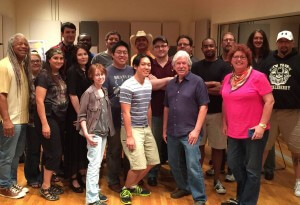
Beginners, intermediates and experts took away valuable insight from Mr. Fennoy’s workshop that will undoubtedly help them as they progress in their careers. The energy and encouragement shared by all over the course of two days proved to be an invigorating experience worthy of recommendation.

group VO pic

Please note the information above is only the tip of the iceberg. To learn more visit Dave Fennoy’s website to see if he’ll be in your city/state anytime soon!

http://www.voforgaming.com

Look for more posts on topics like voice over, food, art, music, writing, travel, animals and other forms of awesomeness regarding the world we live in!

Filed Under: Creativity, Voice Over Tagged With: Acting, Characters, Creativity, Dave Fennoy, Video Games, Voice Acting, voice actor, voice actress, voice artist, Voice Over, voice over artist, voice over career, voice over studio, voice over talent, voice over website

  • « Go to Previous Page
  • Page 1
  • Interim pages omitted …
  • Page 3
  • Page 4
  • Page 5

Primary Sidebar

Categories

  • Creativity
  • Krav Maga
  • Music
  • Uncategorized
  • Voice Over
  • Yoga

Archives

  • January 2022
  • September 2021
  • January 2019
  • December 2018
  • May 2018
  • March 2018
  • February 2018
  • January 2018
  • November 2017
  • October 2017
  • August 2017
  • July 2017
  • March 2017
  • February 2017
  • January 2017
  • June 2016
  • April 2016
  • September 2015
  • August 2015

©2026 Mary Morgan // Voice Over Site by Voice Actor Websites

marymorganvoice@gmail.com
817-845-7862